
In the past, companies chose candidates based on technical experience. Today, the deciding factor is how people communicate, collaborate, and manage emotions.
So-called soft skills have become a competitive advantage. According to The Conversation, they are essential to thrive in complex work environments, where adaptability and empathy are just as important as technical knowledge.
Technology can automate tasks, but it cannot replace empathy, creativity, or human connection.
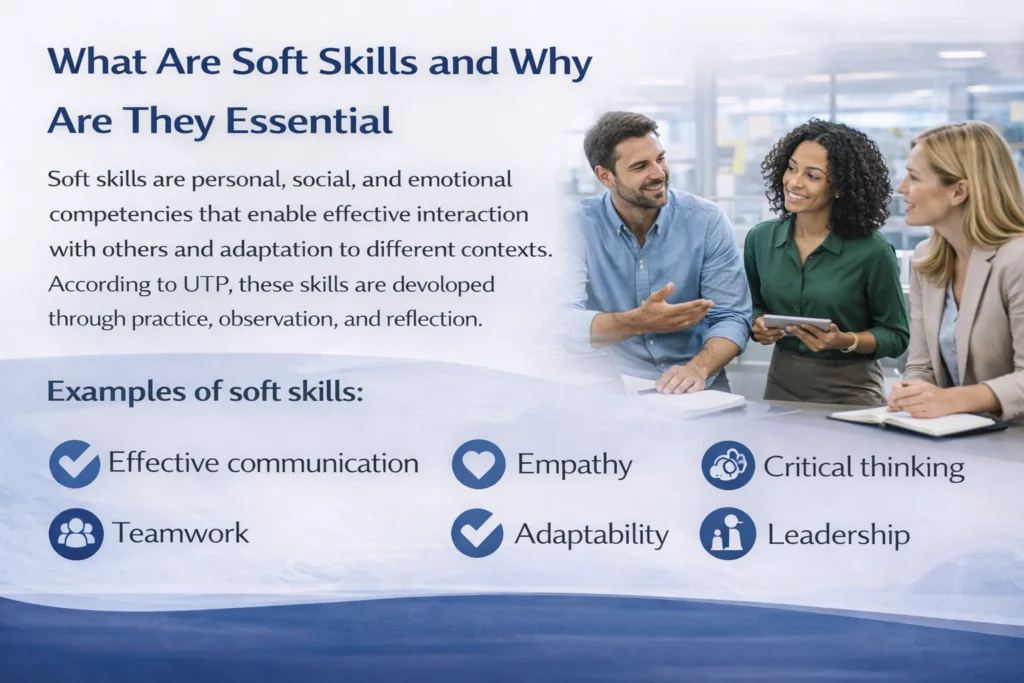
What Are Soft Skills and Why Are They Essential
Soft skills are personal, social, and emotional competencies that enable effective interaction with others and adaptation to different contexts.
According to UTP, these skills are developed through practice, observation, and reflection.
Examples of soft skills:
- Effective communication
- Empathy
- Critical thinking
- Teamwork
- Adaptability
- Leadership
UTP highlights that more than 80 percent of recruiters prioritize soft skills in their hiring processes. In short, how you work is just as important as what you know.
The Importance of Soft Skills Development in the Modern Workplace
Today’s job market demands professionals who can adapt, communicate, and work as a team.
According to Iberdrola, soft skills are the engine of innovation and sustainability in organizations.
Technical knowledge may open the door, but your ability to communicate, resolve conflicts, and maintain healthy relationships is what keeps you there and helps you grow.
Hard skills get you the job. Soft skills help you keep it, and enjoy it.

Key Soft Skills for Professional Development
Effective Communication in the Workplace
Communication is not just about speaking, it is about connecting.
It involves active listening and expressing ideas with clarity and empathy.
CognosOnline notes that 75 percent of workplace conflicts could be avoided with better communication.
Knowing how to communicate is synonymous with leading with confidence.
Emotional Intelligence and Effective Leadership
Emotional intelligence is the foundation of self-management and human-centered leadership.
INCAE identifies it as the most valued skill by companies in Latin America.
A professional who manages their emotions and understands others creates more empathetic and collaborative environments.
Critical Thinking and Problem Solving
Critical thinking allows you to analyze and question information before making decisions.
It is a key skill for innovation and continuous improvement.
Professionals who think critically can offer creative and sustainable solutions to business challenges.
Teamwork and Collaboration
The Inter-American Development Bank states that collaborative teams are up to 30 percent more productive.
Collaboration requires respect, adaptability, and recognition of others’ value.
A team-oriented environment drives innovation and collective well-being.
Adaptability and a Growth Mindset
Adaptability is the ability to adjust strategies in response to change.
According to UBITS, adaptable professionals are 2.5 times more likely to be promoted.
Adopting a growth mindset allows you to see mistakes as learning opportunities.
Empathy and Human-Centered Leadership
Leadership in the 21st century is defined by empathy.
CognosOnline highlights that “a good leader is first a good person.”
An empathetic leader builds trust, motivates teams, and generates sustainable long-term results.

How to Develop Soft Skills Step by Step
Developing soft skills is a process that combines introspection, training, and practice.
These are the most effective strategies:
1. Self-Observation and Constructive Feedback
Analyze your behaviors, identify your reactions, and ask for feedback.
Others can reveal areas for improvement that you may not see.
2. Continuous Learning
Participate in leadership, communication, or emotional intelligence programs.
Platforms like Coursera or LinkedIn Learning offer high-quality resources.
3. Deliberate Practice
Every conversation or project is an opportunity to apply what you have learned.
UBITS states that hands-on learning is the most effective way to consolidate these competencies.
4. Mentors and Professional Coaching
A coaching process can help you strengthen leadership, communication, and self-confidence through personalized strategies.
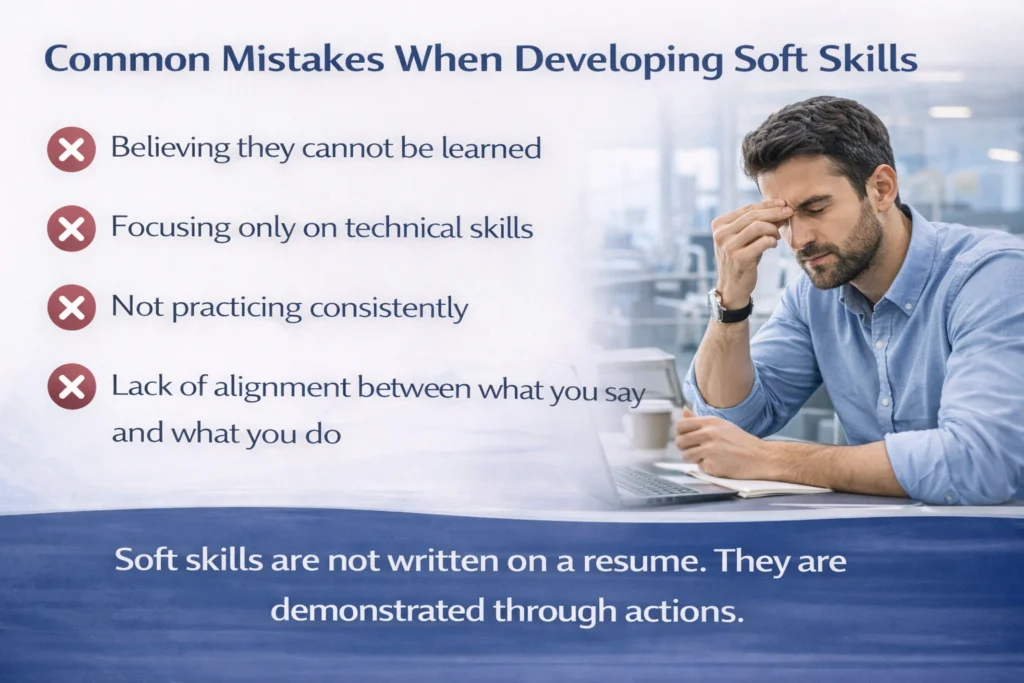
Common Mistakes When Developing Soft Skills
- Believing they cannot be learned
- Focusing only on technical skills
- Not practicing consistently
- Lack of alignment between what you say and what you do
Soft skills are not written on a resume. They are demonstrated through actions.
Soft Skills Are the Human Advantage of the Future
Soft skills are not an add-on, they are the core of professional excellence.
They allow us to communicate with empathy, resolve conflicts, and build trust-based relationships.
The future belongs to those who combine intelligence with humanity.
Developing them not only boosts your career, it transforms the way you live and work.
Soft Skills Checklist for Your Growth
- I listen actively before responding.
- I communicate with empathy and clarity.
- I face change with a positive attitude.
- I seek improvement through feedback.
- I collaborate constructively with my team.
- I foster trust and mutual respect.
Do you want to develop your soft skills to improve your leadership and grow professionally?
At CareerCoach.com.co, we help you strengthen key competencies such as communication, empathy, and conscious leadership through personalized programs.
Schedule a free session with a certified coach and start building the professional version of yourself that will open new opportunities.