
The COVID-19 pandemic brought about global changes in many areas of life, and one of the most notable transformations was the shift from traditional office-based work to remote work. This change introduced both positive and negative aspects into the work process, significantly impacting employees, employers, and the overall dynamics of work.
The Global Shift from On-Site to Remote Work
When the pandemic swept across the world, governments and companies were forced to take urgent measures to ensure the safety of their citizens and employees. One such measure was the mass transition of workers to remote work. This was driven by the need to reduce physical contact and prevent the spread of the virus. However, as the pandemic subsided, it became clear that remote work had become popular among many employees and employers. Thus began a global shift in the paradigm of work, with the concept of working from home gaining long-term relevance.

Advantages of Remote Work
After the pandemic ended, many employees who experienced the benefits of remote work were reluctant to return to the office. They discovered numerous advantages in this form of work that made their daily lives more comfortable and productive.
1. Saving Time and Money on Commuting
One of the most significant advantages of remote work is the ability to save time and money that were previously spent commuting from home to the office. In large cities, where traffic congestion is an integral part of daily life, remote work allowed people to eliminate the stress associated with long commutes. This is especially important for those who spent several hours daily in transit, which is not only tiring but also affects their physical and emotional well-being.
2. Reducing Stress from Traffic Jams
The stress associated with long commutes and traffic jams negatively impacted employees’ mental health. Remote work helped minimize this stress, as there was no longer a need to deal with road congestion and waiting in traffic. The freed-up time could be spent on rest, sports, or hobbies, positively impacting overall well-being.
3. Work-Life Balance
Remote work provided many employees, especially young mothers, with the opportunity to better balance their work responsibilities with their personal lives. Mothers who previously struggled with childcare due to office work finally enjoyed harmony between their professional and family obligations. This allowed them to spend more time with their children, engage in their upbringing, and maintain professional productivity.
4. Flexible Scheduling
Remote work opened up new opportunities for flexible scheduling. Employees were able to plan their day independently, adjusting work tasks to their individual biorhythms and needs. This is especially important for people who work better in the evenings or prefer to start their day early. Flexibility allowed many employees to find a balance between work and rest, increasing their productivity and satisfaction.

Disadvantages of Remote Work
Despite the obvious advantages, remote work also has its drawbacks, which must be considered. These disadvantages can significantly impact employees’ psychological and physical well-being if appropriate measures are not taken to overcome them.
1. Blurring of Work and Personal Life
One of the main challenges of remote work is the merging of work and home responsibilities. When the home becomes the office, it becomes harder to separate personal space from work time. This can prevent employees from fully disconnecting from work, negatively affecting their mental health and causing burnout.
2. Problems with Concentration and Discipline
Working from home requires a high level of self-discipline and organization. Being in a familiar environment where it is easy to get distracted by household chores, employees may experience difficulties concentrating on work tasks. This can decrease productivity and increase the risk of missed deadlines.
3. Lack of Face-to-Face Communication
Another disadvantage of remote work is the lack of face-to-face communication with colleagues. Office communication facilitates not only information exchange but also fosters team spirit and the development of friendly relationships. In remote work, many employees feel isolated and lack social connections, which can negatively affect their emotional state.
4. Technical Challenges
Technical issues are also a significant barrier to remote work. Not all employees have access to a stable internet connection or the necessary equipment to perform their duties effectively. Technical failures can lead to delays and inefficiencies, adding extra stress.

Coping with Remote Work Challenges
Despite the difficulties, remote work can be successful and effective with the right approach and adaptation to the new work format. There are various strategies that help deal with challenges and find a balance between work and personal life.
1. Creating a Dedicated Workspace
One of the first steps to successful remote work is creating a dedicated workspace at home. This could be a specific work area or even a separate room where the employee can focus on their tasks without distractions. Organizing a comfortable workspace helps establish a mental boundary between work and home, which enhances productivity.
2. Establishing a Clear Schedule
To work effectively from home, it’s essential to establish a clear schedule that includes time for work and breaks. This helps avoid the merging of work and personal obligations and reduces the risk of burnout. Regular breaks and adherence to a work schedule support high productivity and physical well-being.
3. Separating Work and Personal Duties
It’s important to learn how to separate work and personal duties, even when in the same space. This can be achieved by setting priorities and planning the day so that time is allocated for both work tasks and personal matters. Strict adherence to this principle helps avoid overload and stress.
4. Introducing New Habits for Health Maintenance
Maintaining physical and psychological health is a key factor in successful remote work. Regular exercise, meditation, outdoor walks, and healthy eating help sustain a high energy level and cope with the negative effects of stress. Introducing new healthy habits contributes to increased productivity and overall well-being.
5. Using Technology for Communication
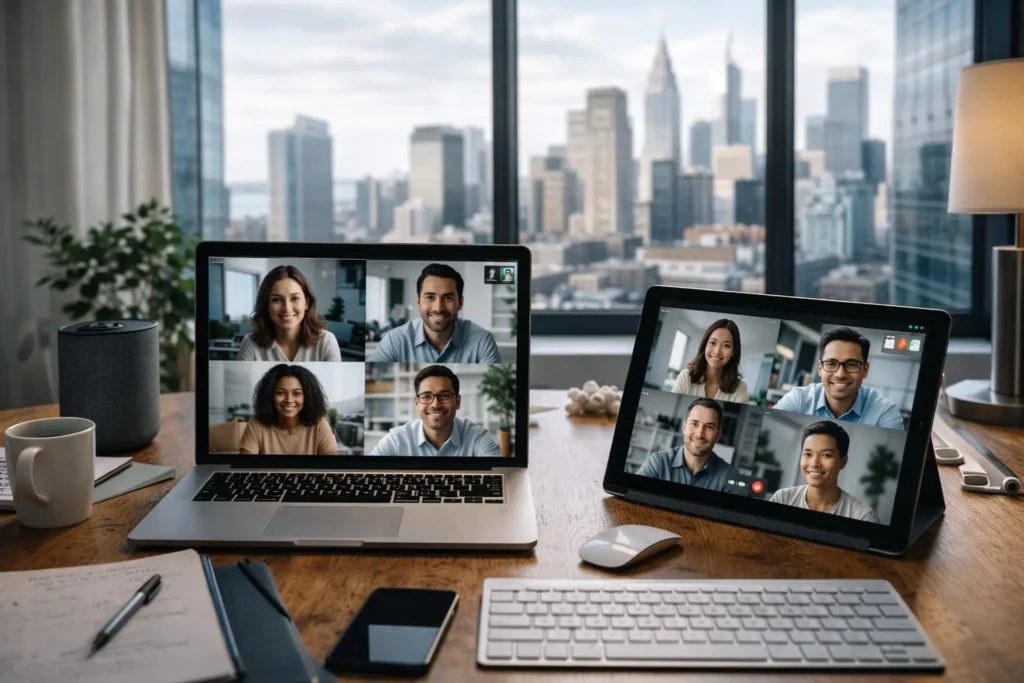
Modern technology offers numerous opportunities for communication and interaction with colleagues, even when working from home. Using video conferencing, messengers, and other communication tools helps maintain team connections and feel part of a work community. Regular communication helps prevent isolation and supports team spirit.
6. Learning and Skill Development
Remote work opens new opportunities for learning and developing professional skills. Online courses, webinars, and workshops allow employees to expand their knowledge and improve their qualifications. This not only enhances their competitiveness in the job market but also contributes to personal growth.
Impact of Remote Work on Companies and the Economy
The shift to remote work significantly impacted not only employees but also companies and the economy as a whole. This trend became a catalyst for changes in business processes and organizational development strategies.
1. Changing Business Models
Many companies have reassessed their business models and adapted them to new conditions of remote work. This included implementing new technologies, revising organizational structures, and changing approaches to personnel management. Companies became more flexible and innovative, allowing them to adapt successfully to changing market conditions.
2. Reducing Office Space Costs
Remote work allowed companies to cut expenses on renting office spaces and associated costs. This is particularly relevant for large organizations where office rent was a significant part of the budget. The saved funds can be redirected to business development and improving employee working conditions.
3. Expanding Talent Pool
The remote work format opened up new opportunities for attracting talented professionals from different parts of the world. Now, companies can hire employees without being limited by geographical boundaries, allowing them to select the best of the best. This enhances organizations’ competitiveness and innovation.
4. Impact on the Economy and Labor Market
Remote work also influenced the economy and labor market as a whole. The transition to a remote work format promoted the development of digital infrastructure and technologies, which, in turn, stimulated economic growth. However, it also led to changes in the employment structure and the need for new skills, requiring adaptation from both employees and educational institutions.
The Future of Remote Work
With changing global trends and adaptation to new realities, remote work has become an integral part of the modern work process. Despite all the challenges and issues, it offers unique opportunities for professional and personal development.
1. Hybrid Work Models
The future of remote work lies in hybrid models that combine elements of both office and remote work. This allows employees to choose the most comfortable working conditions, increasing their satisfaction and efficiency.
2. Development of Digital Skills
With the growing importance of remote work, there is an increasing need for the development of digital skills. Employees must be ready to adapt to new technologies and tools to remain competitive in the labor market.
3. Impact on Urban and Transportation Landscapes
Remote work also affects urban and transportation landscapes. Reducing the flow of people to offices leads to changes in city infrastructure and reduces the load on transportation systems. This opens new opportunities for city development and improves the quality of life for residents.
4. Employees’ Psychological Well-being
In the future, companies will pay more attention to the psychological well-being of employees working from home. Implementing support programs and developing emotional resilience will become an important part of corporate culture, helping to prevent burnout and boost employee motivation.
Conclusion
The transition to remote work during and after the pandemic marked an important milestone in the history of the work process. It opened new opportunities and challenges for both employees and companies, changing the usual rhythm of life. It is crucial to understand that successful adaptation to remote work requires considering all its pros and cons, as well as implementing strategies aimed at increasing productivity and employee well-being. In a rapidly changing world, remote work continues to be relevant and significant, offering new perspectives for development and growth.